
Collection Inspiration
An Arts and Crafts Culture
From the snowy peaks of the Atlas mountains, to the temperate Mediterranean coast, to the dry desert Sahara under a shimmering sun, the Moroccan landscape is as diverse and unique as the people who call it home.

From the markets of Morocco
Explore hidden designs from an ancient world




An Arts and Crafts Culture
From the snowy peaks of the Atlas mountains, to the temperate Mediterranean coast, to the dry desert Sahara under a shimmering sun, the Moroccan landscape is as diverse and unique as the people who call it home.
Collection Inspiration
The Berber People
The people of this region are called “Berber” and speak a unique Berber language. They remain true to their traditions while forever being influenced by islamic rule during the 7th century.

The Berber People
Many tribes still live a semi-nomadic lifestyle, following the herds who ascend the mountains in the summer months and down the mountains in the winter months.

The Berber People
Mile by mile, this diverse environment provides a wealth of inspiration for the 500 plus tribes who call this region home.

From Fiber to Design

Materials of Tradition
Wool and goat’s hair are the traditional materials of choice. The color yellow could be achieved by boiling the wool in a mixture of yellow almond leaves and the flower of a plant called takkoumt. Black could be achieved by boiling the wool in a mixture of dried pomegranate skins crushed to a powder.

Language of Symbols
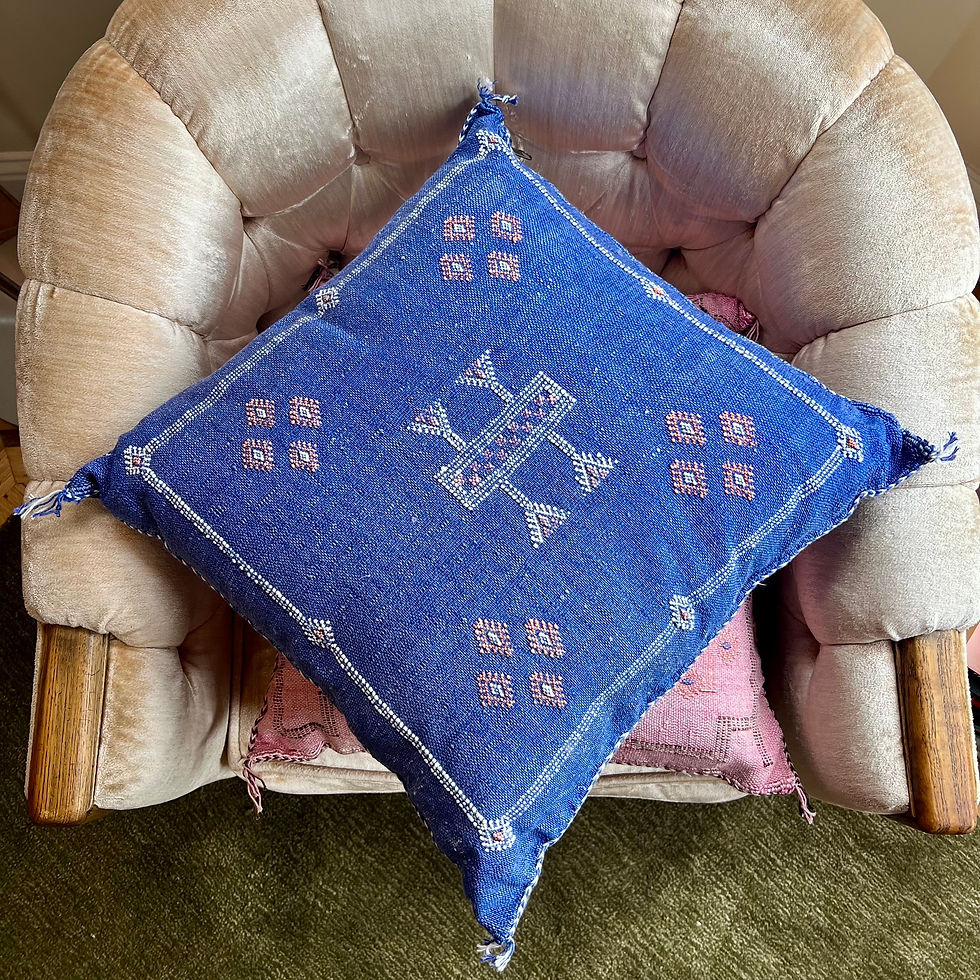
Many tribes identify themselves and their belongings using simple geometric symbols called a “Wasm”. These symbols can be combined together and repeated to form a chain or row. For example, a row of diamonds or Xs end to end.

Knot by Knot
Knot by knot a rug comes alive on the loom.
Over the last 75 years, imported dyes and fabrics have allowed for a greater diversity of expression and faster output.
From Fiber to Design
Materials of Tradition
Wool and goat’s hair are the traditional materials of choice. The color yellow could be achieved by boiling the wool in a mixture of yellow almond leaves and the flower of a plant called takkoumt. Black could be achieved by boiling the wool in a mixture of dried pomegranate skins crushed to a powder.
Language of Symbols
Many tribes identify themselves and their belongings using simple geometric symbols called a “Wasm”. These symbols can be combined together and repeated to form a chain or row. For example, a row of diamonds or Xs end to end.
Knot by Knot
When dipped into dye, only the uncovered, raw fabric takes on the color. After dyeing, the wax is gently melted off, revealing the preserved design beneath
From Fiber to Design

The Berber Identity
The people of this region are called “Berber” and speak a unique Berber language. They remain true to their traditions while forever being influenced by islamic rule beginning in the 7th century.
Nomadic Life
Many tribes still live a semi-nomadic lifestyle, following the herds who ascend the mountains in the summer months and down the mountains in the winter months.
From many tribes, a shared spirit
Mile by mile, this diverse environment provides a wealth of inspiration for the 500 plus tribes who call this region home.
Life and Legacy of the Berber People
Design Throughout the Ages
Traditional Berber design feature repetitive geometric patterns, symmetrically balanced across rows. Berber interpretations often draw influence from oriental rugs with center medallions, as well as contemporary designs shaped by Western demands. As always, striving to find a balance between the new and the old, a middle ground between telling the stories of the traditional patterns while also catering to modern consumer interests.


Design Throughout the Ages
Traditional Berber design feature repetitive geometric patterns, symmetrically balanced across rows. Berber interpretations often draw influence from oriental rugs with center medallions, as well as contemporary designs shaped by Western demands. As always, striving to find a balance between the new and the old, a middle ground between telling the stories of the traditional patterns while also catering to modern consumer interests.